Top 10 Overlooked Tax Credits and Deductions for 2026

As tax season approaches, understanding available credits and deductions becomes crucial for maximizing your returns.
As we move through the 2026 tax season, it is vital to remember that the Canada Revenue Agency (CRA) offers several benefits that go unclaimed by thousands of Canadians every year. One of the most significant is the Canada Workers Benefit (CWB). This refundable tax credit is designed to supplement the earnings of low- and modest-income workers and is missed by nearly 25% of eligible taxpayers.
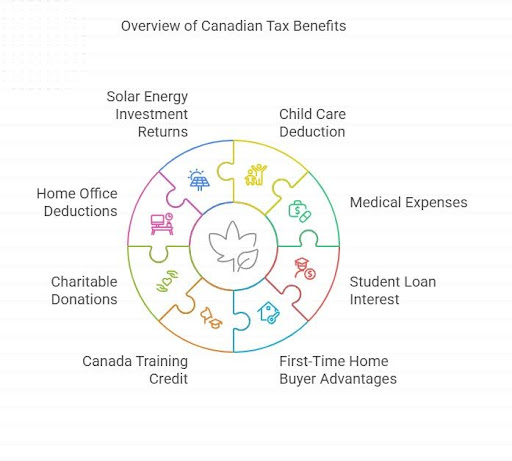
Here’s a detailed breakdown of often-overlooked tax benefits that could significantly impact your missed tax credits deductions for 2026.
1. Child Care Deduction: Maximizing Benefits for Working Parents
The Child Care Deduction remains one of the most substantial tax benefits for Canadian families. For the 2026 tax year, ensure you are using the correct limits: $8,000 for children under age 7, and $5,000 for children aged 7 to 16. If a child is eligible for the Disability Tax Credit, the limit remains $11,000 regardless of age, here’s what you need to know.
Firstly, the eligible expenses include the following:
- Professional daycare centers and licensed facilities
- Before and after school programs
- Summer day camps and specialized educational programs
- Qualifying nannies, babysitters, and boarding schools
- Sports programs with sufficient child care elements
- Nursery schools and preschool programs
Secondly, here are other important considerations to keep in mind for missed tax credits deductions for 2025–2026 :
- The lower-income spouse must typically claim this deduction
- Expenses must be incurred to enable work, education, or research
- Receipts must include the provider’s Social Insurance Number or business number
- Overnight camps have specific claiming limits
- Medical or educational expenses cannot be claimed as child care
As you can see, maximizing the Child Care Deduction involves more than just knowing the basics. A conversation between Redditors expands on the different aspects of childcare within Canada.

Now, let’s delve into another essential tax credit that could maximize your missed tax credits deductions for 2026.
2. Medical Expenses: Comprehensive Coverage Options
The medical expense tax credit extends far beyond basic healthcare. Below is a detailed look at lesser-known eligible expenses.
1. Medical Devices and Equipment
- Orthopedic shoes and custom-made orthotics
- CPAP machines and supplies
- Hearing aids and batteries
- Wheelchair ramps and lifts
- Hospital beds for home use
2. Therapeutic Treatments
- Acupuncture and naturopathic treatments
- Psychological services
- Speech therapy
- Occupational therapy
- Vision therapy
3. Special Considerations
- Medical marijuana with prescription
- You can claim travel expenses if you had to travel at least 40km (one way) to obtain medical services not available near your home. If you had to travel more than 80km, you can also claim meals and accommodation. In 2026, the threshold has been indexed to the lesser of $2,834 or 3% of your net income.
- Specialized training to care for dependents
- Home modifications for medical accessibility
- Incremental costs of gluten-free products for celiac disease
Feeling overwhelmed by all these medical expense options yet? Don’t worry; we’re moving on to a topic that many people don’t cover while going through missed tax credits deductions for 2026 — student loan interest.
3. Student Loan Interest: Strategic Repayment Benefits
The student loan interest credit offers more flexibility than many realize. Here are a few ways it helps:
1. Qualifying Loans
- Canada Student Loans
- Provincial/territorial student loans
- Integrated student loans
- Some bank loans if consolidated with government loans
2. Strategic Planning
- Interest can be carried forward for five years
- Both current and prior year interest payments can be claimed
- Consolidation loans may affect eligibility
- Grace period interest is eligible for the credit
If you thought those student loans were just a financial burden, think again. Up next, we’re diving into first-time home buyer advantages that offer surprising perks so you don’t fall for missed tax credits deductions for 2026.
4. First-Time Home Buyer Advantages: Beyond the Basic Credit
The First-Time Home Buyers’ Tax Credit (HBTC) provides a non-refundable tax credit of up to $1,500 (based on a $10,000 amount). Additionally, ensure you are utilizing the First Home Savings Account (FHSA), which allows you to contribute up to $8,000 annually ($40,000 lifetime) with tax-deductible contributions and tax-free withdrawals.
1. Additional Programs
- Home Buyers’ Plan (HBP) allows RRSP withdrawals up to $60,000 per person ($120,000 for couples) for a down payment.
- GST/HST new housing rebate
- Provincial land transfer tax rebates
- First-Time Home Buyer Incentive program
2. Qualification Criteria
- You haven’t owned a home in the previous four years
- The home must be your principal residence
- Both new and existing homes qualify
- Special provisions for persons with disabilities
Ready to continue investing in yourself? Up next, let’s explore how the Canada Training Credit enhances lifelong learning opportunities.
5. Lifetime Learning Through Canada Training Credit: Investment in Skills
The Canada Training Credit offers significant advantages for continuous education for individuals in the following ways:
1. Eligible Programs
- University and college courses
- Professional certification programs
- Technical training courses
- Language training programs
- Business and entrepreneurship courses
2. Accumulation Strategy
- Annual CTCL increase of $250
- Lifetime maximum of $5,000
- Amounts carry forward automatically
- Can be combined with other education credits
You can optimize your charitable giving strategy by adopting the following methods:
1. Donation Methods
- Cash contributions
- In-kind donations of securities
- Real estate and property donations
- Life insurance policies
- Cultural and ecological gifts
2. Tax Planning Strategies
- Strategic donation bundling to maximize the 29% federal tax credit rate on amounts over $200.
- Donation bundling across years
- Securities donation to avoid capital gains
- Employer matching programs
- Planned giving options
Who knew that giving could be so rewarding? Coming up next are ways to maximize your impact through home office deductions.
7. Home Office Deductions: Comprehensive Coverage
Working from home brings numerous deductible expenses that can help you cover your costs:
1. Eligible Expenses
- Proportional rent or property taxes
- Utilities (heat, electricity, water)
- Internet and phone services
- Office supplies and equipment
- Minor repairs and maintenance
- Home insurance (commission employees only)
2. Calculation Methods
- Note for 2026:The temporary flat rate method is no longer available. All employees must now use the Detailed Method, which requires a signed Form T2200 from your employer and a calculation based on the size of your workspace relative to your home.
Let’s move from the comforts of home with deductions you might not want to miss to look at a few solar energy investment returns.
8. Solar Energy Investment Returns: Green Energy Benefits
The residential clean energy credit is a well-thought initiative that covers the following aspects:
1. Installation Costs
- Solar panel systems
- Solar water heaters
- Battery storage systems
- Integration equipment
- Professional installation
2. Additional Benefits
- Property value increase
- Reduced energy costs
- Provincial incentives
- Net metering credits
9. Electric Vehicle Incentives: Comprehensive Savings
The new Electric Vehicle Affordability Program (EVAP) provides incentives of up to $5,000 for vehicles with a transaction value of $50,000 or less. Notably, there is no price cap if the vehicle is Canadian-made. Eligible categories include:
1. Vehicle Categories
- Battery-electric vehicles
- Plug-in hybrids
- Hydrogen fuel cell vehicles
- Commercial zero-emission vehicles
2. Additional Incentives
- Provincial rebates
- Charging infrastructure credits
- Insurance discounts
- HOV lane access
Want to make sure your family reaps the full benefits available? Keep reading as we discuss maximizing support through the Canada Child Benefit.
It is crucial to understand CCB optimization for relaying the best benefits for your family. The following are the benefits you can accrue:
1. Payment Structure
- Base amount calculations
- Income thresholds
- Supplement eligibility
- Payment schedules
- Retroactive claims
For the July 2025 to June 2026 benefit year, the maximum CCB is $7,997 per child under age 6 and $6,748 per child aged 6 to 17. These amounts are tax-free and based on your 2024 tax return for current payments, while your upcoming July 2026 payments will be calculated from the 2025 return you are filing now.
2. Special Provisions
- Shared custody arrangements
- Disability supplements
- Provincial integration
- International situations
And that’s a wrap! Let’s summarize shall we?
By understanding and properly documenting these credits and deductions, you can significantly reduce your tax burden. Remember to consult with tax professionals for complex situations and keep detailed records throughout the year to maximize your benefits.
Need expert guidance navigating these missed tax credits deductions for 2026? Contact our team at One Accounting for personalized tax planning strategies that align with your financial goals.
1. What is the deadline to file my 2025 taxes in 2026?
For most Canadians, the tax filing and payment deadline is April 30, 2026. If you or your spouse are self-employed, you have until June 15, 2026 to file, but any taxes owed must still be paid by the April 30 deadline to avoid interest charges.
2. Can I still use the "Flat Rate" ($2/day) method for my home office?
No. The temporary flat-rate method introduced during the pandemic has officially ended. For your 2026 filing, you must use the Detailed Method. This requires you to track your actual expenses (rent, electricity, internet) and have a Form T2200 signed by your employer.
3. I missed claiming a credit in 2024. Is it too late?
Not necessarily! The CRA allows you to request an adjustment to a return for any of the previous 10 calendar years. If you realized you missed the First-Time Home Buyers' Credit or a disability supplement from a few years ago, we can help you file a T1 Adjustment Request.
4. How do I know if I qualify for the new Electric Vehicle Affordability Program (EVAP)?
To qualify for the $5,000 incentive, the vehicle must be a new battery-electric, hydrogen fuel cell, or longer-range plug-in hybrid. The purchase price (MSRP) must generally be $50,000 or less, though
certain Canadian-made models are exempt from this price cap in 2026.
5. Why did my Canada Child Benefit (CCB) amount change in July?
The CCB is recalculated every July based on the adjusted family net income from the tax return you just filed. If your income increased in 2025, your monthly payments starting in July 2026 may decrease. Conversely, if your income dropped, your benefit should increase.
Share:
Recent Blogs
Top Tax Write-Offs for Small Businesses in Canada
GST/HST Credit Payment Dates in Canada
What Is a Compilation Engagement?
What Is the Toronto Vacant Home Tax?
Internal auditor vs external auditors
The Basics of Accounting Services Every Business Should Know

Kamal Harichandran
Masters in Accounting — Asst. Accounting Manager, One Accounting
Kamal Harichandran holds a Master's degree in Accounting and serves as the Assistant Accounting Manager at One Accounting. Kamal specialises in bookkeeping, payroll, and corporate tax filings, working closely with the management team to deliver efficient and accurate financial services to clients. His academic background and practical experience give him a thorough command of accounting standards and compliance requirements in Canada. Kamal is dedicated to helping businesses stay organised, compliant, and financially informed, contributing significantly to the firm's reputation for reliable and professional service.
- Phone: +1 647-847-4858
- Email: [email protected]
