Top Tax Write-Offs for Small Businesses in Canada
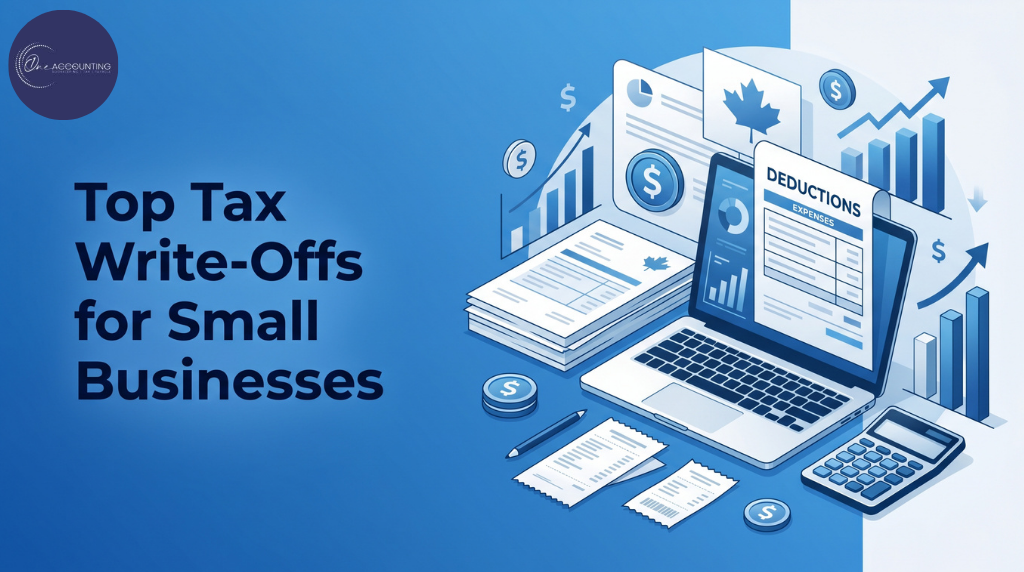
Running a small business in Canada comes with a range of expenses, but many of those costs may qualify as tax write-offs that help reduce your taxable income and lower the amount of tax you owe.
This guide covers the most important tax write-offs for small businesses in Canada, including what qualifies, how deductions work, and how to claim them correctly.
So, if you are a sole proprietor, freelancer, or incorporated business owner, knowing your eligible deductions is one of the smartest financial moves you can make.
What Are Tax Write-Offs in Canada?
A tax write-off is a business expense you can deduct from your total income before the CRA calculates how much tax you owe. The lower your taxable income, the lower your tax bill. Tax write-offs are one of the most practical tools available to small business owners in Canada.
The CRA generally allows businesses to deduct expenses that are reasonable and incurred to earn income. An expense qualifies as a write-off when it has a direct connection to your business operations. Personal expenses do not qualify, and mixed-use expenses must be split between personal and business portions.
How Tax Write-Offs Reduce Your Taxable Income
Tax write-offs reduce the income the CRA uses to calculate your tax owing. Your gross income is what your business earns. Your net income is what remains after eligible deductions. The CRA taxes you on net income, not gross.
How Deductions Lower Taxable Income
For example, a sole proprietor earning $80,000 with $20,000 in eligible deductions pays tax on $60,000 of taxable income. That gap can translate to thousands of dollars saved, depending on your marginal tax rate.
How Canadian Tax Brackets Factor In
Canada uses a marginal tax rate system. Federal and provincial rates combine to determine your total tax obligation. Reducing your taxable income can push you into a lower bracket, lowering the rate applied to a portion of your earnings.
Write-Offs Are Not Dollar-for-Dollar Savings
A $1,000 deduction does not save you $1,000 in taxes. It reduces your taxable income by $1,000. The actual savings depends on your marginal rate. A business owner in a 40% combined bracket saves $400 for every $1,000 claimed.
Small Deductions Add Up
Office supplies, software subscriptions, and professional memberships may each feel minor on their own. Across a full fiscal year, they represent a meaningful reduction in taxable income. Claiming every legitimate deduction available is one of the most effective ways to lower your annual tax bill.
Why Recordkeeping Matters
The CRA may audit your return and request documentation for any expense claimed. Receipts, invoices, bank statements, and mileage logs all serve as supporting evidence. Strong records protect your deductions and give you confidence at tax time.
Common Tax Write-Offs for Small Businesses in Canada
Small businesses in Canada can deduct a wide range of operating expenses from their taxable income. The CRA also permits deductions on costs that are reasonable and directly tied to earning business income. These are the most common categories small business owners claim each year.
Home Office Expenses
Working from home allows you to deduct a portion of your household costs as a business expense. The CRA calculates the deductible amount based on the percentage of your home used exclusively for work.
Eligible home office deductions include:
- Rent or mortgage interest
- Hydro, heat, and utilities
- Internet and phone bills
- Home insurance
- Property taxes (where eligible based on business structure and use)
- Maintenance and repairs related to the workspace
Vehicle and Travel Expenses
Using your personal vehicle for business purposes makes a portion of your vehicle costs deductible. You must track business kilometers driven versus total kilometers for the year.
Eligible vehicle and travel deductions include:
- Fuel and oil
- Insurance premiums
- Lease payments or depreciation
- Repairs and maintenance
- Parking fees on business trips
- Airfare, hotels, and meals for business travel(50%)
Advertising and Marketing Costs
Many advertising and marketing expenses are deductible when they meet CRA requirements. The CRA allows deductions on a broad range of marketing and advertising expenses.
Eligible advertising and marketing deductions include:
- Website design and hosting
- Google and social media ad spend
- Business cards and printed materials
- Sponsorships and promotional events
- Email marketing software
- SEO and content marketing services
Professional Fees and Accounting Costs
Fees paid to professionals who help you run or grow your business are deductible. These are among the most straightforward deductions a small business owner can claim.
Eligible professional fee deductions include:
- Accountant and bookkeeper fees
- Legal fees related to business operations
- Business consulting fees
- Tax preparation services
- Financial advisor fees tied to business decisions
Employment and Self-Employment Expense Deductions
Depending on your work arrangement, both employees and self-employed individuals may be able to claim eligible work-related expenses in Canada.
Home Office for Employees
Employees required to work from home may claim certain home office expenses if they meet CRA eligibility rules and have a completed Form T2200 from their employer. Deductible expenses can include a portion of rent, utilities, internet, and maintenance costs.
Supplies and Operational Costs
Work-related supplies and operating expenses may also be deductible when used to earn income. Common claims include office supplies, software, internet, phone bills, postage, and small equipment purchases.
Tax Deductions vs. Tax Credits in Canada
| Tax Deductions | Tax Credits |
| Reduce your taxable income | Reduce the amount of tax you owe directly |
| Lower the portion of income subject to tax | Applied after your tax has been calculated |
| Value depends on your tax bracket | Usually provides a fixed percentage/value |
| Common for business expenses and eligible write-offs | Common for specific government incentives/benefits
|
Common Mistakes to Avoid When Claiming Deductions
- Claiming personal expenses as business expenses without a clear business connection
- Failing to keep receipts and records for deductible purchases
- Overestimating home office or vehicle use for business purposes
- Deducting capital expenses incorrectly instead of depreciating them over time
- Missing eligible deductions due to poor bookkeeping or a lack of tax planning
- Submitting inaccurate or unsupported claims, which may trigger CRA reviews or penalties
Claiming eligible tax write-offs is one of the simplest ways for Canadian small businesses to reduce taxable income and improve cash flow. With proper documentation and careful expense tracking, businesses can take full advantage of available deductions.
FAQ
1. What are tax write-offs in Canada for small businesses?
Tax write-offs are eligible business expenses that reduce your taxable income, lowering the amount of income tax your business owes.
2. What expenses can small businesses claim as tax deductions in Canada?
Common deductible expenses include office rent, utilities, advertising, salaries, professional fees, business travel, and eligible home office costs.
3. How do tax write-offs reduce taxable income in Canada?
They reduce your business income before taxes are calculated, lowering your overall taxable profit.
4. What is the difference between tax deductions and tax credits?
Tax deductions reduce your taxable income, while tax credits reduce the actual amount of tax you owe.
5. Do I need receipts to claim tax write-offs in Canada?
Yes. The CRA requires supporting records such as receipts, invoices, and statements to verify claimed deductions.
Share:
Recent Blogs
10 Commonly Missed Tax Credits & Deductions for 2026
GST/HST Credit Payment Dates in Canada
What Is a Compilation Engagement?
What Is the Toronto Vacant Home Tax?
Internal auditor vs external auditors
The Basics of Accounting Services Every Business Should Know
Inheritance Tax in Canada: What Happens When You Inherit

Sunith Varkey
CPA, CA — Founder, One Accounting
Sunith Varkey is a Chartered Professional Accountant (CPA, CA) and the Founder of One Accounting, a top-rated accounting firm serving businesses across Toronto, Oakville, Hamilton, Mississauga, Burlington, Waterdown, and Calgary. With deep expertise in corporate tax, bookkeeping, and business advisory, Sunith built One Accounting with a mission to be the trusted financial partner for small and medium-sized businesses across Canada. He believes that behind every financial statement is a journey of hard work and dedication, and he is committed to delivering transparent, strategic, and reliable accounting support to every client.
- Phone: +1 416-319-9207
- Email: [email protected]
