Bookkeeper vs Accountant: What Does Your Business Need Right Now
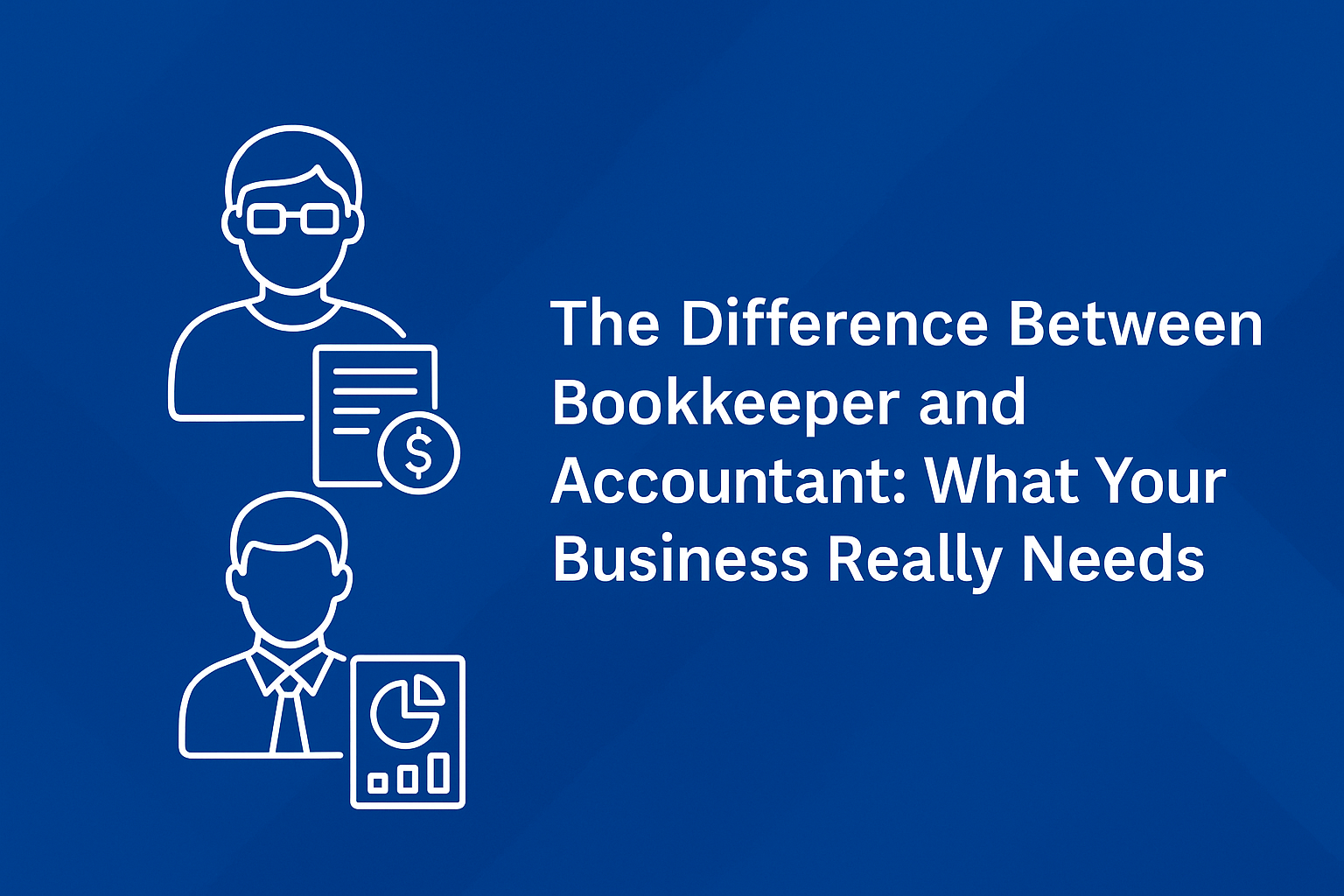
As a small business grows, managing its financial responsibilities can become increasingly complex. While many business owners recognise the need for professional financial support, deciding whether to work with a bookkeeper, an accountant, or both is not always straightforward.
The right choice depends on the stage of the business, its structure, and the type of financial support it currently requires. This guide takes a practical, situation-based approach to help business owners determine whether bookkeeping or accounting support should be the priority at this stage of their growth.
Quick Answer
|
What Stage is Your Business At?
Your business’s stage can be a useful starting point when deciding what kind of financial support to prioritise. As your revenue, reporting requirements, and business structure become more complex, your need for professional support may change as well.
Just Started or Under $250K in Revenue: Bookkeeping Is the Priority
For a newly established business or one generating less than $250,000 in revenue, getting the day-to-day financial administration under control is often the first priority. A bookkeeper can manage routine tasks such as recording transactions, reconciling accounts, and tracking income and expenses.
With these processes handled consistently, business owners have more reliable financial information to work with and can spend less time on routine administration. An accountant may still be needed for specific tax or accounting matters, but for businesses whose immediate challenge is keeping their records organised, bookkeeping can be the right place to start.
Growing, $250K to $1M, Incorporated or Considering Incorporation: An Accountant Becomes Essential
As revenue increases and a business becomes more established, financial decisions often carry greater tax and business implications. This becomes particularly important when a business is incorporated or the owner is considering incorporation.
At this stage, an accountant can provide support with corporate tax obligations, tax planning, financial reporting, and other accounting matters. The business may still rely on bookkeeping support for its regular financial administration, while accounting guidance becomes increasingly important for decisions that affect the company’s tax position, reporting, and overall financial direction.
Over $1M in Revenue or Multiple Entities: A Full Financial Team May Be Appropriate
Businesses generating more than $1 million in revenue or operating through multiple entities often have more complex financial requirements. These may include higher transaction volumes, more extensive reporting needs, corporate tax considerations, and greater financial planning requirements.
At this point, the question may be less about choosing one professional and more about building the right financial team. A business may benefit from a dedicated bookkeeper or bookkeeping team to maintain accurate financial records, alongside a CPA or accounting team to manage tax, reporting, planning, and other complex financial matters. Clearly defining who handles each responsibility can help the different functions work together efficiently.
Situations Where You Need a Bookkeeper First
If your biggest challenge is keeping up with the financial tasks that happen throughout the month, bookkeeping may be the most practical place to start. Here are some common situations where having consistent support can make a noticeable difference.
Daily Transaction Recording
Businesses generate financial transactions every day. Sales, supplier payments, operating expenses, and other transactions all need to be recorded accurately and consistently.
For example, a growing service business may have numerous customer payments and operating expenses each month. If these transactions are not recorded regularly, the business owner may have difficulty understanding current financial performance or preparing accurate financial reports.
Having someone manage this process on an ongoing basis can reduce the administrative burden on the business owner and ensure that financial information does not fall behind.
Bank Reconciliation
Bank reconciliation involves comparing the transactions recorded in the accounting system with the corresponding bank statements and identifying discrepancies.
For a business with regular financial activity, this is an important part of maintaining accurate records. Regular reconciliations can help identify missing transactions, duplicate entries, or other discrepancies before they create larger problems.
Invoicing and Tracking Receivables
Managing invoices and outstanding customer payments can become time-consuming as a business grows. A business may have completed work and issued invoices but still needs to monitor which customers have paid and which amounts remain outstanding.
Keeping track of these amounts gives the business owner a clearer picture of what has been billed, what is still outstanding, and what cash may be expected from customers.
Payroll Records
Businesses with employees have recurring payroll-related responsibilities and record-keeping requirements. Maintaining accurate payroll records is an important part of managing the company’s financial information.
Depending on the services provided by the professional or firm, bookkeeping support may include maintaining payroll records or coordinating payroll-related processes. Because payroll services can vary between providers, businesses should confirm exactly what is included before engaging a bookkeeper.
Staying GST/HST Ready
Businesses registered for GST/HST need to maintain appropriate records to support their tax reporting obligations. Keeping financial information organised throughout the reporting period makes it easier to determine the relevant amounts and meet filing requirements.
Instead of trying to organise months of transactions just before a filing deadline, businesses can benefit from keeping their records up to date throughout the year. This makes it easier to access the information needed when GST/HST reporting deadlines arrive.
If these situations sound familiar, bookkeeping may be the right place to start, particularly when the immediate challenge is keeping up with recurring financial administration.
Situations Where You Need an Accountant First
Some business decisions have implications that go beyond day-to-day financial administration. If you’re dealing with a change in business structure, a tax obligation, financing requirements, or a significant financial decision, this is where an accountant can become an important part of the process.
Incorporation
Choosing whether to incorporate a business is an important decision that can have tax and financial implications. Business owners considering incorporation may benefit from professional advice before choosing a structure, so they can better understand how the decision could affect their business and personal circumstances.
An accountant can provide guidance on relevant financial and tax considerations and work alongside legal professionals where legal advice is required.
Corporate Tax Return Filing
Incorporated businesses have corporate tax filing obligations that differ from those of unincorporated businesses. Preparing and filing a corporate tax return requires appropriate knowledge of the applicable tax rules and the company’s financial information.
If your business is incorporated and needs to meet its corporate tax filing obligations, an accountant or qualified tax professional can help ensure the required information is prepared and submitted appropriately.
CRA Audit
A CRA audit can require a business to provide financial records and other supporting documentation. The process may be complex, particularly when the business owner is uncertain about what information is required or how the review should be handled.
An accountant can help the business understand what financial information is relevant, organise supporting documentation, and provide professional assistance throughout the process.
Financial Statements for a Bank Loan
Businesses seeking financing may be asked by lenders to provide financial statements or other financial information as part of the application process.
If a lender requires formal financial statements or other financial reporting, an accountant can help prepare or review the relevant information based on the lender’s requirements and the nature of the engagement.
Tax Planning for Salary vs. Dividend
Owners of incorporated businesses may need to consider how to withdraw funds from their corporation, including whether to receive compensation as salary, dividends, or a combination of the two.
The appropriate approach depends on the circumstances of both the individual and the corporation. Tax considerations can vary, and there is no universally applicable choice. An accountant can assess the relevant factors and help the business owner understand the potential tax implications of each approach.
If your business is facing one of these situations, professional accounting support may be needed before you make a decision or meet an important tax or reporting obligation.
Can One Person Do Both?
Some accounting firms provide both bookkeeping and accounting services, allowing businesses to manage their day-to-day financial records and broader accounting needs through one provider. This can be useful as the business grows and its requirements become more complex.
However, a bookkeeper and a CPA do not necessarily have the same qualifications or scope of work. Some bookkeepers work independently, while others work within accounting firms where CPAs handle tax, accounting, and advisory matters. If you need both services, ask whether the firm offers them under one roof and who will be responsible for each aspect of your financial needs.
The Most Common Mistake Business Owners Make
The most common mistake is not choosing a bookkeeper over an accountant, or vice versa. It is using the wrong type of support for the task at hand.
For example, paying an accountant to manage routine bookkeeping tasks that could be handled by a bookkeeper may lead to unnecessarily high costs. On the other hand, relying on a bookkeeper for tax planning or complex financial decisions may create risks if the advice requires an accountant’s expertise.
The practical approach is to match the professional to the need: use a bookkeeper for maintaining accurate financial records and an accountant for tax, accounting, and strategic financial matters. When both are needed, working with a firm that offers both services can help ensure the two functions work together effectively.
Get the Right Support for Your Business with One Accounting
There is no wrong answer when deciding between a bookkeeper and an accountant, as long as you obtain the right support for your business’s current needs. A bookkeeper can help keep your financial records accurate and organised, while an accountant can provide guidance on tax, compliance, reporting, and financial decisions.
As your business grows, the support you need may also change. You may start with bookkeeping to keep your financial records accurate and up to date, add accounting support as your needs become more complex, or require both from the outset. If you are ready to strengthen your financial processes, explore One Accounting’s bookkeeping and accounting services as your next steps.
Share:
Recent Blogs
Top Tax Write-Offs for Small Businesses in Canada
10 Commonly Missed Tax Credits & Deductions for 2026
GST/HST Credit Payment Dates in Canada
What Is a Compilation Engagement?
What Is the Toronto Vacant Home Tax?
Internal auditor vs external auditors
The Basics of Accounting Services Every Business Should Know
Disclaimer: Information shared in this blog is general in nature and may not apply to all situations or circumstances. Contact One Accounting for accurate, professional advice.

Sunith Varkey
CPA, CA — Founder, One Accounting
Sunith Varkey is a Chartered Professional Accountant (CPA, CA) and the Founder of One Accounting, a top-rated accounting firm serving businesses across Toronto, Oakville, Hamilton, Mississauga, Burlington, Waterdown, and Calgary. With deep expertise in corporate tax, bookkeeping, and business advisory, Sunith built One Accounting with a mission to be the trusted financial partner for small and medium-sized businesses across Canada. He believes that behind every financial statement is a journey of hard work and dedication, and he is committed to delivering transparent, strategic, and reliable accounting support to every client.
- Phone: +1 416-319-9207
- Email: [email protected]
