What Do Bookkeepers Do to Keep Your Business Compliant and Audit-Ready?

When it comes to staying compliant and audit-ready, bookkeeping is more than just balancing numbers. It’s about building a financial foundation you can trust everyday. That’s exactly what One Accounting specializes in. From startups to scaling businesses, we help you stay on track, meet deadlines, and be audit-ready with zero stress.
So, what do bookkeepers do to ensure everything is in order? Let’s walk through it step-by-step and explore how their role is essential for financial health and peace of mind.
1. Accurate Daily Record‑Keeping
Staying organized starts with daily financial discipline. Bookkeepers ensure that no transaction slips through the cracks. This step forms the base of every compliant and audit-ready business.
Accuracy in record-keeping helps prevent future errors. It also ensures your business can track cash flow in real time. When done right, daily bookkeeping makes the rest of your accounting seamless.
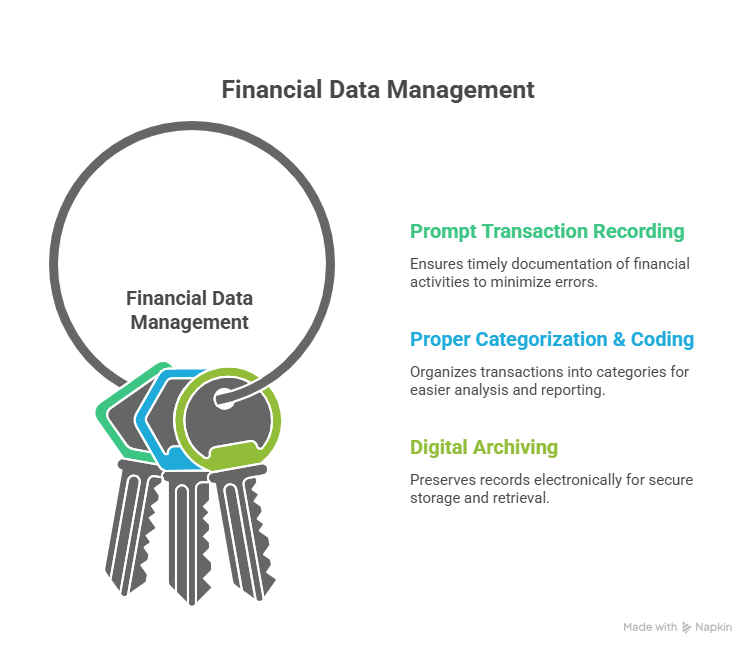
a. Prompt Transaction Recording
Every sale, expense, invoice, and payment is recorded each day using cloud software to prevent backlog and maintain accuracy.
b. Proper Categorization & Coding
Transactions are categorized as income, expenses, assets, or liabilities to align with financial and tax reporting standards accurately.
c. Digital Archiving
Receipts and invoices are scanned, labelled, and stored in folders so they can be instantly retrieved for audits when needed.
Once your records are captured, it’s time to ensure everything matches up. Let’s look at what do bookkeepers do next.
2. Regular Account Reconciliation
Once your records are up-to-date, reconciliation ensures they match your actual financials. It helps catch errors early and keeps your statements reliable. This process is essential for maintaining integrity in your books.
By reconciling bank accounts monthly, bookkeepers detect anomalies. These include duplicate charges, missed deposits, or accounting entry mistakes. So, what do bookkeepers do in this step? They make sure nothing falls through the cracks.
a. Monthly Bank & Credit Card Reconciliations
Bookkeepers compare ledger entries with bank statements to identify any inconsistencies or missed transactions that need attention.
b. Investigating & Resolving Discrepancies
Any mismatches found during reconciliation are researched and corrected to maintain accuracy in your financial records and reports.
c. Trial Balance Adjustment
Bookkeepers ensure debits equal credits by adjusting balances and correcting errors that could impact reports and future decisions.
Clean books are just one part of compliance. Here’s what do bookkeepers do to ensure every transaction has a clear trail.
3. Documentation & Audit Trail Management
Compliance means having receipts for every financial move. Bookkeepers maintain audit trails so your business can prove every transaction. These records are not just helpful; they are often legally required.
Being audit-ready requires discipline in documentation. From storing contracts to naming files consistently, every detail matters. That’s part of what bookkeepers do to keep you covered.
a. Vouching Source Documents
Each financial entry is supported by contracts, receipts, or invoices to ensure every transaction has reliable proof when needed.
b. Structured Filing Systems
Documents are stored using naming conventions and logical folders, so everything is organized and easily accessible during audits.
c. Compliance with Retention Policies
Bookkeepers retain financial records for legally required periods based on industry regulations and Canadian tax laws.
Financial safety isn’t just about numbers, it’s also about process control. Let’s explore what do bookkeepers do to ensure that.
4. Strong Internal Control Framework
Fraud prevention begins with smart internal controls. Bookkeepers help define roles, create approval processes, and limit access to sensitive data. These controls protect both your team and your business.
What do bookkeepers do to strengthen these controls? They separate duties, monitor changes, and track approvals. That adds a layer of accountability to your finances.
a. Segregation of Duties
Bookkeepers assign tasks like invoicing and reconciliation to separate staff members to prevent errors and reduce fraud risks.
b. Approval Workflows
Approval steps are built into payments, payroll, and expenses to prevent unauthorized actions and increase accountability in processes.
c. Access Restrictions & Audit Logs
Permissions are role-based, and every change to financial data is logged to track who made changes and why.
Bookkeeping isn’t just about entries, it’s about understanding your numbers. Here’s what do bookkeepers do to make sense of them.
5. Routine Financial Reporting
Reports show where your business stands. Regular financial reporting is more than paperwork; it’s a real-time reflection of your financial health. Bookkeepers ensure these reports are timely and accurate.
With scheduled reviews, bookkeepers explain what the numbers mean. This adds context and ensures issues are caught early. That’s what bookkeepers do to keep your business informed and confident.
a. Monthly & Quarterly Core Reports
Bookkeepers prepare detailed cash flow, balance sheets, and income reports to help you understand your business’s performance.
b. Review & Reconciliation Sessions
These sessions are used to review statements, identify irregularities, and ensure your records are accurate and transparent.
c. Snapshot Documentation
Timestamped reports show your business’s financial status at specific times, helping auditors and stakeholders review your progress.
After internal processes are working smoothly, your next concern is compliance. What do bookkeepers do to keep you on the right side of the law?
6. Regulatory & Tax Compliance
Bookkeepers are your first line of defence during tax season. They ensure all transactions are categorized correctly and all forms are filed on time. This protects your business from penalties and fines.
What do bookkeepers do here? They manage payroll, ensure deductions are accurate, and make sure you’re following Canadian tax rules. That way, you’re never caught off guard.
a. Accurate Tax Coding
All entries are classified correctly to reflect applicable tax categories, including VAT, GST, and other corporate tax obligations.
b. Payroll & Withholding Management
Bookkeepers calculate employee pay accurately and submit required payroll tax deductions to meet filing deadlines consistently.
c. Adherence to Industry Requirements
They follow laws and standards specific to your industry, such as anti-money laundering rules and financial regulatory compliance.
Being audit-ready isn’t just about the moment, it’s about preparation. Let’s dive into what do bookkeepers do to manage that.
7. Audit Preparation & Support
Audit season doesn’t need to be stressful. Bookkeepers help gather documents, organize files, and even communicate with auditors on your behalf. This ensures the audit is smooth and interruption-free.
Being proactive is key. What do bookkeepers do before an audit? They run mock reviews and checklists to make sure everything is in place.
a. Define the Audit Scope
Bookkeepers clarify the audit type, whether internal, tax, or external and collect documents based on the auditor’s requirements.
b. Organize an Audit‑Readiness Checklist
They prepare structured lists covering reconciliations, legal papers, and financial statements to ensure smooth audits.
c. Pre-Audit Tests & Mock Reviews
Mock audits reveal documentation gaps and process issues, so corrections are made before the formal audit begins.
d. Liaison with Auditors
Bookkeepers answer questions, provide documentation, and help auditors understand financial entries to reduce client stress.
Once auditors leave, it’s time to reflect and refine. Here’s what do bookkeepers do to upgrade your systems and processes.
8. Post‑Audit Follow‑Up & Continuous Improvement
Audits often reveal areas for growth. Bookkeepers don’t just close the books, they improve your systems. This includes fixing processes and training staff.
Want to build a better system going forward? That’s what bookkeepers do. They make your business stronger with every review.
a. Actionable Insights
Bookkeepers review findings and use them to recommend system changes that reduce risks and improve internal processes.
b. Systems & Process Refinement
They adapt software, approvals, and workflows to eliminate inefficiencies discovered during or after audit reviews.
c. Ongoing Training & Quality Checks
Training is conducted regularly to keep staff informed, and quality checks ensure bookkeeping processes remain effective.
Manual processes are prone to error, but what do bookkeepers do to automate accuracy and improve speed across financial tasks?
9. Leveraging Technology & Automation
Today’s bookkeeping isn’t done on paper. Tools and apps make it faster, more accurate, and easier to audit. Bookkeepers are trained to use the latest technology to their advantage.
What do bookkeepers do with tech? They automate, alert, and integrate. That means fewer errors and more peace of mind.
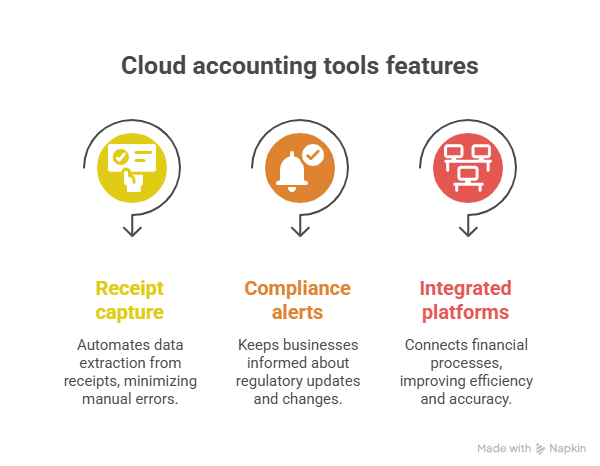
a. Cloud Accounting Tools
Bookkeepers use tools like QuickBooks or Xero to maintain real-time ledgers and accurate audit-ready financial data.
b. Receipt Capture & OCR
With apps like Dext, they automatically digitize receipts and match them to transactions for easy filing and reference.
c. Compliance Alerts & Integrated Platforms
Payroll apps like Gusto remind businesses of tax deadlines and integrate with accounting systems to reduce manual work.
All these functions build toward key outcomes. Here are the top benefits and reasons why what do bookkeepers do truly matters.
10. Benefits to Your Business
- Reduced Risk: Bookkeepers help you avoid penalties by maintaining accurate records, ensuring deadlines are met, and minimizing errors through consistent practices.
- Effortless Audits: With your documents organized and reconciled, bookkeepers simplify audit preparation, reducing stress and time spent gathering information.
- Better Transparency: Clean books make it easier to share information with investors and banks, improving your credibility and decision-making process.
- Reliable Financial Operations: Strong internal controls and consistent processes reduce financial surprises and support a stable foundation for your business growth.
- Peace of Mind: With a bookkeeper overseeing the details, you can confidently focus on growing your business and serving your customers.
After covering all the critical functions, it’s time to summarize the full impact of what do bookkeepers do for compliance and growth.
Conclusion: Let One Accounting Do the Heavy Lifting
So, what do bookkeepers do? They manage everything from daily records to full-blown audit prep, ensuring your business is always compliant, always audit-ready. That’s exactly what we do at One Accounting.
We combine deep expertise with the latest tech to give you accurate books, real-time insights, and total peace of mind. Want stress-free compliance and smoother audits? Reach out to One Accounting today, your financial future is in safe hands.
At One Accounting, we don’t just provide bookkeeping, we deliver clarity, accuracy, and confidence in every report and reconciliation. Our dedicated team ensures you’re not just prepared for audits, but positioned for growth. Contact us today and discover how simple compliance can be when you’ve got the right experts on your side.