Internal Auditor vs External Auditor: A Complete Guide
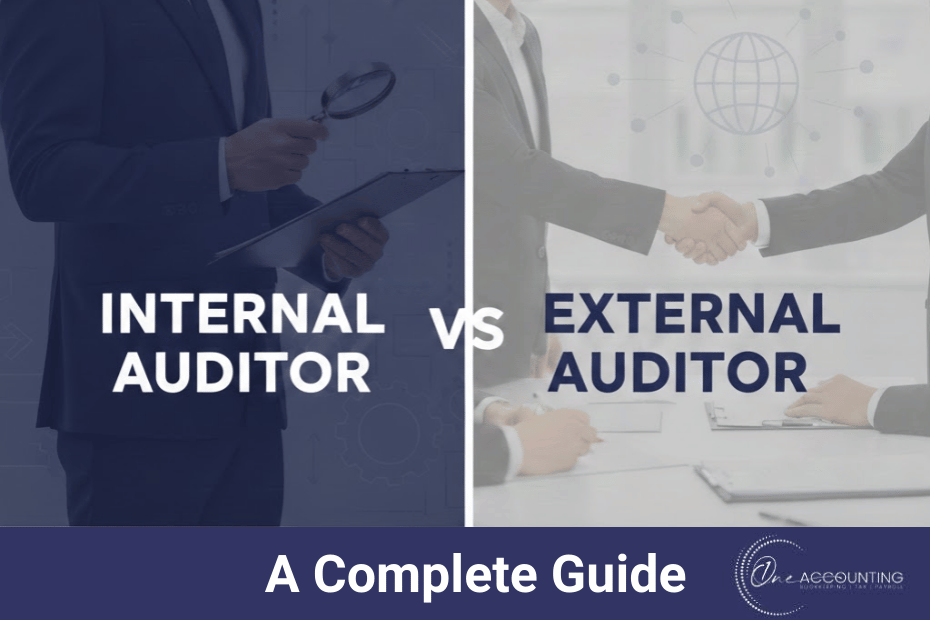
If you are looking for the financial integrity of your organisation, an audit is a necessary step. In fact, both internal and external audits play a significant role in a sound business setup. However, internal and external audits are distinct and not interchangeable.
That is why it makes sense to have a clear understanding of what an internal audit is and how it complements an external audit. This comprehensive blog attempts to do exactly that. We will review what internal and external audits are and how to ensure they work best.
What is an Internal Auditor?
Internal auditors are the professionals who work within the organisation. In some cases, internal audit may also be outsourced to external professionals.
The internal auditor is expected to evaluate and enhance the effectiveness of internal controls, risk management practices, and overall governance frameworks. They perform comprehensive, systematic appraisals across various facets of the business. This includes operational workflows, financial reporting processes, regulatory compliance measures, and even IT infrastructure security.
The role of an internal auditor is important because it ensures the organisation is operating in line with its objectives. The internal audit also protects the organisation’s assets from various threats and ensures it operates in accordance with statutory guidelines.
An internal auditor has ongoing involvement in the organisation’s operations. This actually makes them strategic advisors. They collaborate with every department head to refine processes, boost operational efficiency, and support informed decision-making at every level. They help foster a culture of continuous improvement and self-reliance without external pressure.
What is an External Auditor?
An external auditor, in contrast, operates as an independent third-party expert, most commonly from a certified public accounting (CPA) firm or an equivalent such as a CA firm. Their job involves meticulously examining an organization’s financial statements and verifying compliance with predefined regulations, accounting standards, and reporting frameworks.
Unlike internal auditors, who work in the interests of the organisation, an external auditor must provide an unbiased professional opinion. Their duty is to provide financial and regulatory reassurance to external stakeholders, such as investors, banks, and regulatory bodies like the CRA.
These auditors work with rigorous standards. The responsibility of an external auditor is significant. They are expected to uphold transparency, prevent financial misrepresentation, and foster stakeholder confidence. The external auditors are expected to demonstrate complete independence from the audited entity.
Internal Auditors vs External Auditors –A detailed comparison
That was perhaps a good introduction to the differences between internal and external auditors. We also observed subtle differences between internal and external auditors.
We will now present a detailed comparison of the factors that distinguish the two types of auditors.
Definition and purpose
The role of an internal auditor is based on improvement. An internal auditor is a company employee who seeks to improve internal controls and operational efficiency. He will handle the task throughout the year. The auditor will examine an organization’s internal ecosystem to assess control robustness, quantify enterprise-wide risks, and evaluate operational effectiveness.
An external auditor is a third-party valuer who has an impartial view of the organisation. They focus on understanding the organisation from a compliance perspective. They focus on financial statements and regulatory compliance. The role’s objective is to safeguard the public interest.
Responsibility and Accountability
Internal auditors bear responsibility for conducting objective evaluations and reporting directly to the organization’s audit committee or senior executives. The accountability of internal auditors lies within the organisation. They also advise management on remediation strategies, such as process redesigns or control enhancements.
External auditors are accountable to a broader audience. This includes regulators, shareholders, and the public. Their focus is solely on attesting to compliance, without providing consulting services. They will generally not provide any consultation or suggestions on remedial measures to the organisation.
That introduces a simple difference: internal auditors suggest options for improvement and transformation within the organisation. External auditors focus on impartially verifying legal matters and an organisation’s credibility.
Frequency of Audit
Internal audits operate on a continuous or periodic cadence. It would be reviewed at regular intervals to ensure ongoing improvement.
External audits are generally conducted once a year. The audits are aligned with the fiscal year to support proper streamlining. An external audit may also be triggered by events such as mergers, acquisitions, and liquidations.
In essence, the internal audit constantly monitors issues such as cyber risks and inflation’s impact. An external auditor, on the other hand, offers periodic health checks for the organisation.
Qualifications and Professional Standards
Internal auditors typically possess certifications such as the Certified Internal Auditor (CIA) credential from the IIA. In addition, they should adhere to the International Standards for the Professional Practice of Internal Auditing.
External auditors are predominantly CPAs or Chartered Accountants. They are often augmented by CISA for IT audits or CISSP for security, and bound by AICPA, PCAOB, or ICAI standards.
Both internal and external auditors are expected to demonstrate traits such as independence, analytical rigor, and lifelong learning.
The table below should give you a clear understanding of the differences between internal and external auditors
| Aspect | Internal Auditor | External Auditor |
| Definition and Purpose | Improvement-oriented; evaluates controls, risks, operations for internal enhancement | Compliance-oriented; assures financial statements for external stakeholders |
| Responsibility | Reports to management/audit committee; advises on improvements | Independent opinion to regulators/investors; no consulting |
| Frequency | Ongoing/periodic (risk-based, 3-5 years per area) | Annual or event-driven |
| Qualifications | CIA, IIA standards; risk/industry focus | CPA, AICPA/PCAOB; broad compliance |
Why Choose an Internal Auditor?
Choosing internal auditors for your organisation offers multiple benefits. It can be an excellent option for early detection of inefficiencies. In fact, the internal audit should help you avert a few escalations that may inflate your external audit costs by 20-30%.
They have a thorough understanding of your operations. That would give them a complete insight into your organisation. If you are an SME, the internal auditor should be able to help you with a proactive accountability culture. They also help you mitigate the risks that would otherwise get flagged in external audits.
Why Choose an External Auditor?
External auditors offer you unmatched credibility. This is one of the key parameters for industries that are highly regulated, such as banking. The external auditors provide you with the financial transparency you need.
The external auditors are fiercely independent, which should be the best way to instill confidence in your organisation. That apart, they provide a completely impartial yardstick. That would mean you can build trust with your customers if you operate in areas such as export or fintech.
Benefits of Choosing One Accounting as Your Accounting Partner
As noted above, the internal and external auditor roles are distinct and independent. But, how about an auditor who does not work just as an external auditor, but also provides you with insights like an internal team member?
That is One Accounting for you. We believe in a hybrid model that lets us work like an in-house accounts team while also safeguarding you against legal and compliance risks.
Here are a few advantages that we have on offer for you –
- Holistic, Hands-On Involvement We collaborate as if we were your in-house accounts department. Larger organizations benefit from our customized quarterly health checks.
- Hybrid Expertise with Tech-Driven Edge Our unique model fuses external compliance mastery with internal-style advisory services.
- Proven Results and Peace of Mind Past clients, including hospitality chains and edtech startups, report 30% faster external audits and 25% lower error rates post-partnership.
Schedule a free financial health assessment today and unlock auditing that works for your business, not against it.
Conclusion
The difference between internal and external auditors should help you strike the right balance and achieve synergy with your organisation and the guidelines. Internal auditors help you with the inward progress, while external auditors move you towards trust through independence and precision.
However, having an auditor who can serve as both an internal and external auditor should make your life easier. Align with One Accounting to harness this synergy and propel your venture toward enduring prosperity in February 2026 and the years ahead.
Share:
Recent Blogs
The Basics of Accounting Services Every Business Should Know
Inheritance Tax in Canada: What Happens When You Inherit
Canada Capital Gains Tax: A Complete Guide for Property Sellers
How to Calculate Sales Tax in Ontario
Self-Employed Tax Filing: Everything You Need to Know
GST Tax Returns in Canada
Toronto Property Tax Lookup – A Complete Guide
Comparing $105,000 Salary vs. Dividend from a Corporation
Line 23600 Tax Return: What You Need to Know Before Filing in 2025
Everything You Need to Know About Quebec Payroll
Disclaimer: Information shared in this blog is general in nature and may not apply to all situations or circumstances. Contact One Accounting for accurate, professional advice.