What Does a Bookkeeper Do and Why Your Business Needs One

Managing a business means wearing many hats, but when it comes to finances, you don’t want to wing it. If you’ve ever found yourself asking, what does a bookkeeper do, you’re not alone.
A bookkeeper handles the essential financial tasks that keep your business running smoothly, like tracking transactions, managing invoices, preparing reports, and organizing records for tax season. Without a good bookkeeper, it’s easy to fall behind, make mistakes, or miss opportunities to grow.
That’s where One Accounting comes in. As a top-tier CPA firm based in Toronto, we specialize in bookkeeping solutions tailored to your business size and goals. Our team utilises cloud-based software and proven processes to ensure that your financial records are always accurate, up-to-date, and readily available when needed.
Let’s start with the basics and explore exactly what a bookkeeper handles day-to-day.
What Does a Bookkeeper Do?
Understanding what does a bookkeeper do starts with recognizing how many moving parts go into your financial records. Bookkeepers are responsible for managing the daily and monthly financial operations that keep your business on track. They ensure that your data is clean, timely, and actionable for decision-making.

Here’s what goes into keeping your daily books accurate and up to date.
1. Records Daily Financial Transactions
Every day, your business earns money, spends money, or does both. A bookkeeper ensures that all of these activities are accurately recorded. This helps you stay on top of your financial position and make smarter choices.
A smooth bookkeeping process begins with accurate daily entries, which typically include the following:
- Entering Sales and Income: Bookkeepers record every sale, whether it’s cash, credit card, or online payment into your accounting system. This gives you a clear picture of revenue trends over time.
- Logging Purchases and Expenses: From supplies to subscriptions, all business expenses are documented. This allows you to categorize spending and monitor where your money is going.
- Updating Receipts and Invoices: Receipts are attached, and invoices are logged in real time. This prevents anything from being forgotten or double-entered.
This process includes several ongoing tasks to keep your vendors happy. To keep your bills paid on time, here’s what a bookkeeper usually does.
2. Manages Accounts Payable
When you owe vendors or service providers, a bookkeeper keeps things on schedule. They track what needs to be paid and when help you maintain your creditworthiness. This ensures you never miss due dates or damage relationships.
Keeping suppliers happy and accounts current depends on proper tracking, which includes the tasks below:
- Tracking Vendor Bills: Bookkeepers log each incoming bill and match it to purchase orders. This keeps your payments organized and your suppliers happy.
- Scheduling and Sending Payments: They schedule payments based on due dates and cash flow availability. This avoids late fees and supports good financial habits.
- Maintaining Payment Records: Every payment is recorded, along with confirmation details. This creates a reliable audit trail for future reference.
To keep cash flowing in, these tasks are essential. Let’s break down what happens when it’s time to collect money from customers.
3. Handles Accounts Receivable
- Creating Invoices: Bookkeepers generate and send invoices to your customers. Clear billing improves the chances of timely payment.
- Tracking Outstanding Balances: They keep a running list of unpaid accounts and how long they’ve been overdue. This helps you spot payment issues before they grow.
- Following Up on Payments: Gentle reminders or follow-up emails are sent to collect overdue amounts. This improves your cash position without straining relationships.
Bookkeepers reconcile accounts using these standard practices. Here are the steps bookkeepers take to ensure accuracy between your bank and books.
4. Performs Bank Reconciliations
Bank reconciliation is a behind-the-scenes task that makes a big difference. It involves comparing your bank statement to your internal records. This ensures everything matches and uncovers any errors.
A bookkeeper manages this accuracy check by completing the actions listed below:
- Matching Transactions: Bookkeepers line up what’s in your books with what the bank shows. Any mismatches are flagged and corrected.
- Correcting Errors: Duplicate entries or missed deposits are fixed immediately. This keeps your records clean and trustworthy.
- Preventing Fraud: Regular reconciliations help catch unauthorized charges or suspicious activity. It’s a simple way to protect your business.
Bookkeepers prepare reports by following a few essential steps. These are the core reports your bookkeeper will generate and maintain.
5. Prepares Financial Statements
Accurate reporting is a huge part of what does a bookkeeper do. They generate reports that help you understand your financial health. These are essential for decision-making, loans, and tax season.
Summarizing your business’s financial health is done through key reports prepared by your bookkeeper as follows:
- Income Statements: These reports show your revenue, expenses, and profits over a specific period. They help you measure growth and identify spending issues.
- Balance Sheets: A balance sheet breaks down your assets, liabilities, and equity. It’s a snapshot of what your business owns and owes.
- Cash Flow Statements: Bookkeepers prepare these to show where your cash is going and coming from. It’s vital for predicting future shortages or surpluses.
Here are the actions involved in maintaining a clean general ledger. Keeping your ledger accurate involves the following.
6. Maintains General Ledger
The general ledger is where all your transactions are housed. It’s the core of your bookkeeping system. Bookkeepers keep it updated and organized.
The ledger is your financial foundation, and bookkeepers keep it organized through the following:
- Posting Transactions: Each transaction is assigned a proper account and logged in the ledger. This ensures accurate reporting later.
- Adjusting Entries: If mistakes or timing issues arise, adjusting entries are made. This keeps your records aligned with reality.
- Organizing Chart of Accounts: Bookkeepers structure the ledger into categories like revenue, expenses, and assets. This simplifies tracking and analysis.
Let’s explore how payroll processing works under a bookkeeper’s watch.
7. Assists with Payroll Processing
Want your team to get paid correctly and on time? That’s another task a bookkeeper can handle. From calculating wages to recording payroll transactions, they keep everything running smoothly.
From wages to taxes, payroll is managed accurately by performing the steps outlined below:
- Calculating Wages and Deductions: Bookkeepers handle hourly wages, overtime, taxes, and benefits. Everyone receives the correct amount, every time.
- Processing Payments: They prepare direct deposits or cheques for each payroll cycle. This avoids delays and builds trust with employees.
- Recording Payroll Entries: Each payroll is logged for accounting and tax purposes. These records are vital during CRA audits or year-end filing.
These are the steps taken to manage business expenses efficiently. Here’s what bookkeepers do to stay on top of your costs.
8. Tracks Business Expenses
Bookkeepers play a key role in helping you understand spending. They log and categorize every expense your business makes. This data can reveal trends and cost-saving opportunities.
Expense tracking is key to controlling your budget, and bookkeepers handle this process through the following:
- Categorizing Expenses: Bookkeepers tag expenses under categories like travel, marketing, or supplies. This helps you track what areas are costing the most.
- Analyzing Spending Patterns: With reports, you can see where spending spikes or dips occur. That way, you can adjust your budget accordingly.
- Helping with Budgets: Expense tracking supports monthly or quarterly budgeting. It’s one of the most practical answers to what does a bookkeeper do.
Here’s how your records get organized and tax-ready. These tasks are essential for making tax season less stressful.
9. Supports Tax Preparation
Tax season doesn’t have to be stressful. Bookkeepers ensure your documents are ready and accurate for filing. They work alongside your accountant or tax advisor.
Preparing for tax filing begins with a few vital tasks, completed as follows:
- Organizing Records: Receipts, invoices, and payroll data are stored and categorized. This prevents scrambling when it’s time to file.
- Generating Year-End Reports: Bookkeepers prepare profit and loss statements and summaries. These are used directly for tax return filing.
- Coordinating with Accountants: They assist your CPA by answering questions and providing documentation. This speeds up the entire tax process.
Bookkeepers rely on software tools in the following ways. Here’s how technology fits into the bookkeeping process.
10. Uses Bookkeeping Software
A modern bookkeeper doesn’t just use spreadsheets. They rely on digital tools to make bookkeeping faster and more accurate. This is one area where One Accounting stands out.
These actions demonstrate how bookkeepers use software to enhance your financial workflow, as shown below:
- Using Tools Like QuickBooks or Xero: Bookkeepers use cloud software to record and manage data. These tools are secure and accessible from anywhere.
- Automating Tasks: Many tasks like bank feeds or recurring invoices are automated. This saves time and reduces manual errors.
- Providing Real-Time Reports: With software, you can see updated financial reports instantly. It helps you make better, faster decisions.
Beyond just data entry, bookkeepers offer several real-world advantages that can impact your success. Let’s dive into the reasons why every smart business owner needs a reliable bookkeeper on their team.
Why Your Business Needs a Bookkeeper
Hiring a bookkeeper isn’t just about data entry, it’s about creating stability, reducing risk, and supporting growth. If you’re still wondering what does a bookkeeper do for your business, the benefits below will give you a clearer picture. A professional bookkeeper adds real value far beyond the books.
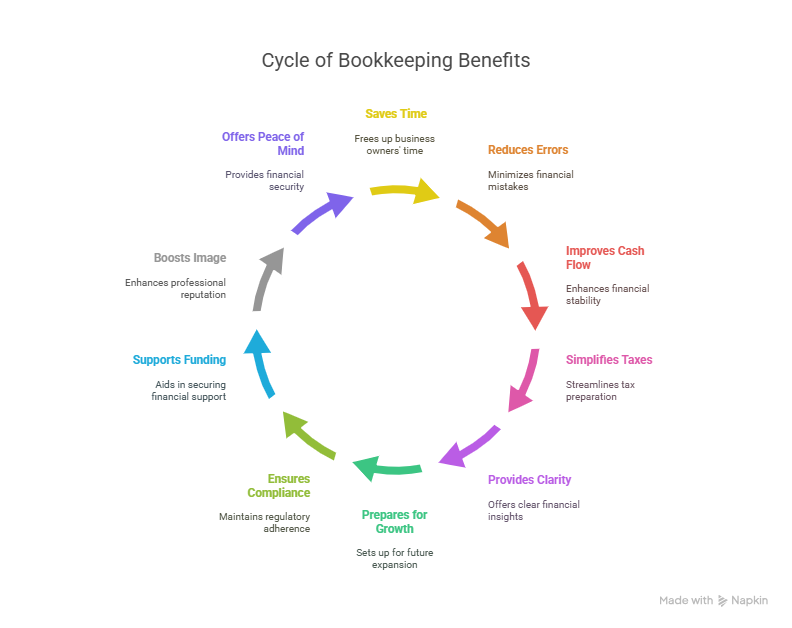
Instead of juggling spreadsheets and receipts, here’s how a bookkeeper ensures your financial tasks are handled quickly and accurately.
1. Saves You Time
Your time is one of your most valuable assets as a business owner. Bookkeeping tasks can be tedious and time-consuming when handled on your own. Having a bookkeeper frees you to focus on customers, products, and growth.
Running a business is demanding, bookkeepers reduce the load by taking over key admin tasks, including the following:
- Reduces Admin Load: Bookkeepers take daily, weekly, and monthly financial tasks off your plate. This means fewer hours spent managing receipts and reconciling bank accounts.
- Streamlines Workflows: They set up systems and schedules that keep everything on track. As a result, your operations become more efficient overall.
- Avoids Last-Minute Scrambles: With timely data entry and updates, nothing piles up. You’ll never have to play catch-up again.
Here’s how a bookkeeper creates structure in your records so you’re not hit with fines, late fees, or CRA issues.
2. Reduces Errors and Penalties
When you make mistakes with your finances, it can cost you, literally. A bookkeeper ensures that your data is correct and that you’re following all the rules. This reduces the chance of audits, penalties, or reputation damage.
To protect your business from fines and recordkeeping issues, bookkeepers focus on the duties outlined below:
- Spots Mistakes Early: Bookkeepers catch double entries, missing receipts, or incorrect categories before they snowball into bigger issues.
- Prepares Accurate Records: With reliable documentation, you won’t need to worry about red flags during tax season.
- Keeps You Compliant: They know how to stay aligned with CRA guidelines and timelines. This helps you avoid interest charges and late filing fees.
To maintain healthy finances month to month, here’s how a bookkeeper manages the details of your daily cash movement.
3. Improves Cash Flow Management
Wondering what does a bookkeeper do for your cash flow? They monitor incoming and outgoing funds to help you stay liquid. With better insight, you can plan for the short- and long-term.
Strong cash flow management depends on a bookkeeper’s ability to carry out the tasks outlined as follows:
- Tracks Daily Spending and Income: Bookkeepers give you a clear view of what money is coming in and going out. This helps you avoid shortfalls.
- Forecasts Future Cash Needs: They use trends and data to project cash flow, allowing you to prepare for lean periods.
- Identifies Payment Gaps: If a customer is late or expenses are too high, they’ll flag it for you early. That keeps your business agile.
Preparing for tax season shouldn’t be a mad scramble, bookkeepers make sure your documents are organized and ready to go.
4. Simplifies Tax Season
Tax season becomes much easier with a bookkeeper on your team. All your documents, receipts, and financial reports are ready and organized. No more digging through drawers or guessing what’s deductible.
When tax season rolls around, bookkeepers reduce stress and boost accuracy by preparing the following:
- Prepares Tax Reports: Bookkeepers summarize key data and expenses so your accountant can file quickly.
- Ensures Nothing Is Missed: Every eligible deduction or business cost is recorded correctly. This helps you maximize your return.
- Coordinates with Tax Professionals: They work directly with your accountant or tax advisor. You don’t have to be the middleman.
Making smart business decisions starts with clear data, and that’s exactly what bookkeepers help deliver through timely financial reports.
5. Provides Financial Clarity
The insights you need to make better business decisions come from the steps below:
- Generates Custom Reports: Want to know your most profitable service? Or where you’re overspending? Bookkeepers give you those answers.
- Explains What the Numbers Mean: A good bookkeeper doesn’t just hand you reports, they help you understand them.
- Supports Smarter Decisions: Clear data means better budgeting, pricing, and investment strategies. It’s a game-changer.
6. Prepares You for Growth
Growth requires structure, and bookkeepers help lay that foundation. Whether you’re hiring, expanding, or investing, clean books make it possible. This is one of the most strategic answers to what does a bookkeeper do.
These steps help you plan strategically and present strong financials as follows:
- Creates Scalable Systems: They design processes that work whether you’re at $100K or $1M in revenue.
- Supports Financial Forecasting: With solid data, you can plan realistic goals and milestones.
- Increases Investor Confidence: Growth often needs funding, and investors love organized financials.
Bookkeepers make sure your filings, deadlines, and reports are handled correctly so you don’t run into regulatory trouble.
7. Ensures Regulatory Compliance
Staying compliant isn’t just about avoiding penalties, it’s about protecting your business long-term. Bookkeepers know how to keep your filings, remittances, and registrations up to date. That’s one less thing you have to worry about.
To ensure everything is filed, reported, and tracked properly, your bookkeeper oversees the actions below:
- Manages CRA Requirements: They handle GST/HST, payroll deductions, and corporate filing deadlines.
- Stays Current on Law Changes: Bookkeepers follow updates in tax and employment law so you don’t have to.
- Documents Every Step: Records are kept in case of audit, dispute, or inspection. Compliance is built into the process.
Here’s how a bookkeeper prepares the documentation and financials required for funding and loan applications.
8. Supports Loan and Funding Applications
Applying for a business loan or investor funding? Bookkeepers provide the financial clarity required for approval. Organized books make you look trustworthy and ready for growth.
When applying for funding, bookkeepers help you present your finances clearly by performing the following:
- Creates Detailed Reports: Lenders need income statements, balance sheets, and cash flow reports. A bookkeeper prepares these professionally.
- Ensures Accuracy and Consistency: Inaccurate or mismatched data can hurt your chances. Bookkeepers double-check everything.
- Builds Financial Credibility: When you’re backed by clean books, banks take you seriously.
Bookkeeping isn’t just internal, it shapes how others see your business. Here’s how bookkeepers elevate your brand.
9. Boosts Professional Image
Strong financial records signal a well-run business. Whether you’re working with clients, partners, or lenders, professionalism matters. A bookkeeper supports this image with clean, timely reporting.
Bookkeepers play a behind-the-scenes role in how professional your business appears through the responsibilities below:
- Demonstrates Responsibility: Being organized with your money reflects overall discipline and commitment.
- Builds Trust with Stakeholders: People are more likely to work with or invest in a business that has its finances in order.
- Adds Credibility to Proposals and Pitches: Clean financials give your presentations real weight.
When your records are accurate and your deadlines are met, that’s peace of mind only a bookkeeper can offer.
10. Offers Peace of Mind
At the end of the day, what does a bookkeeper do for your mental health? Quite a lot. They take the guesswork out of your finances so you can relax and focus on growth.
Bookkeepers provide comfort and control by managing key financial responsibilities as follows:
- Minimizes Financial Stress: You don’t have to wonder if something was missed or misfiled constantly.
- Builds Confidence in Your Numbers: Accurate records mean you can act with certainty.
- Creates Work-Life Balance: With someone managing your books, you gain back time and mental space.
Conclusion
So, what does a bookkeeper do? They provide the structure, accuracy, and insight your business needs to thrive. From logging daily transactions to preparing for tax season and managing cash flow, bookkeepers play a vital role in keeping your financial foundation strong.
If you’re ready to take your business finances seriously, One Accounting is here to help. Our experienced team gives you clarity and peace of mind, so you can focus on what you do best. Let One Accounting be your trusted partner in building a financially healthy, scalable business.